
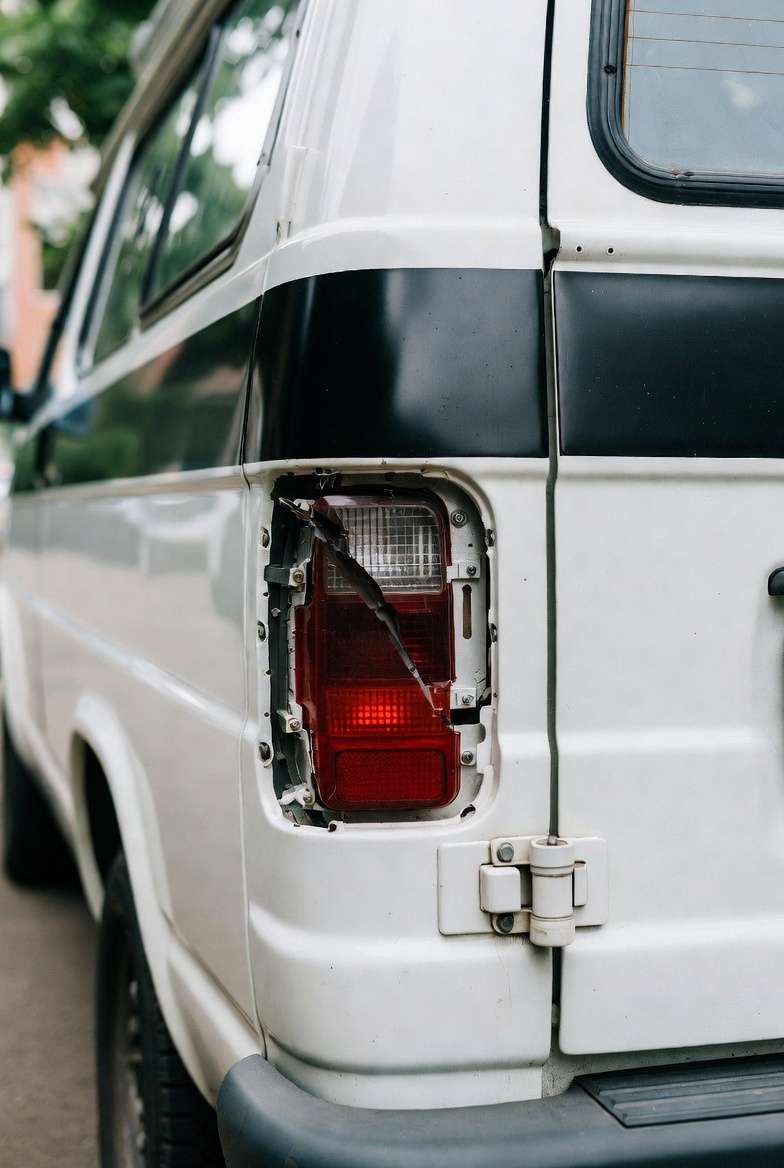
A blown headlight, a cracked tail light, a brake light that's been out for a week — it seems like a minor issue when you've got 130 deliveries to complete. You tell yourself you'll fix it on the weekend. But broken lights on a delivery van are genuinely dangerous, and the consequences go well beyond a defect notice. If you're involved in an accident and your lights aren't working, the liability equation shifts dramatically — regardless of who was actually at fault.
The Real Risks
Brake lights: This is the most dangerous failure. If your brake lights don't work, the vehicle behind you has zero warning when you stop — and as a delivery driver, you stop constantly. Residential streets, driveways, apartments — you're braking dozens of times per hour. One broken brake light might not be noticed by the car behind you. Both out? You're invisible when stopping.
Headlights: Early morning starts (4:30–5:30am) mean you're driving in the dark for the first hour of your shift. A blown headlight halves your forward visibility and makes it harder for oncoming traffic to judge your position and width. On unlit suburban streets, this is seriously dangerous.
Indicators: You're turning into driveways, pulling over, and merging constantly. Non-functioning indicators mean other road users can't predict your movements. According to Queensland Government roadworthy standards, all lighting and signalling systems must be operational for a vehicle to be considered roadworthy.
Reverse lights: You reverse into driveways, out of cul-de-sacs, and at loading docks regularly. Reverse lights warn pedestrians and other vehicles that you're backing up. Without them, you're a silent, backward-moving hazard.
The Legal and Financial Consequences
Defect notices: Police can issue a defect notice for any non-functioning light, requiring you to fix it within a set timeframe. A defected vehicle may be restricted from driving until repaired, which means you can't work.
Insurance: If you're in an accident and your vehicle has a known defect — especially one affecting visibility or signalling — your insurance company may reduce or deny your claim. Driving a defective vehicle can be considered negligence.
Liability: If someone rear-ends you because your brake lights weren't working, you may share or carry the fault — even though they hit you from behind. The argument is simple: if your brake lights had been working, they would have stopped in time.
Daily Light Check
Make it part of your pre-start routine. It takes 60 seconds:
Turn the van on. Walk around it. Check headlights (low and high beam), tail lights, brake lights (press the pedal with something or have someone help), indicators (both sides, front and back), reverse lights, and number plate light. If anything is out, report it to your fleet manager before you leave the depot.
For owner-drivers: keep spare bulbs in the van. Most light globes cost $5–$15 and take 10 minutes to replace. It's one of the cheapest, easiest pieces of maintenance you can do — and one of the most important.