
You've done your load, scanned everything in, and you're sitting in the van at the depot ready to roll. Your steel caps are heavy, your feet are already warm, and you've got 130 stops ahead of you. You glance at the running shoes on the passenger seat. Should you switch? It's one of those questions every driver thinks about but nobody really talks about. Here's what experienced couriers actually do — and why it matters more than you think.
The Case for Running Shoes
Let's be honest — most delivery drivers who've been doing this for more than a few months have switched to lighter footwear on the road. The reason is simple: when you're doing 120+ stops a day, that's 120 times you're jumping out of the van, walking to a door, and jumping back in. Multiply that over a week and you're covering serious ground. Heavy boots slow you down and destroy your feet.
Running shoes or lightweight trail runners give you speed, comfort, and better ankle flexibility for getting in and out of the van. Drivers who switch typically report finishing their runs 20–40 minutes earlier — not because they're running between stops, but because every movement is just slightly faster and less fatiguing.
Your knees and lower back will also thank you. Steel cap boots on concrete all day create impact through your joints that compounds over months and years. Cushioned running shoes absorb that shock. If you're planning a long career in delivery, your joints are your most valuable asset.
The Case Against
There's a reason the depot requires proper footwear. Forklifts, heavy freight, pallet jacks, and other drivers reversing in tight spaces — the depot is a workplace, and dropping a 25kg box on your foot in runners is going to hurt a lot more than in steel caps.
Some companies have strict policies: safety footwear at all times, no exceptions. If you're caught in runners and have an incident, your workers' comp claim could be affected. Check your company's policy before making the switch — and if you're an owner-driver, check your insurance terms.
Weather is another factor. Running shoes in the rain means wet feet by stop three. If you're in Melbourne or anywhere that gets regular rain, consider waterproof trail runners instead of standard mesh runners. According to Safe Work Australia, slips, trips, and falls are one of the most common workplace injuries — and wet footwear on smooth surfaces is a major contributor.
What Most Experienced Drivers Do
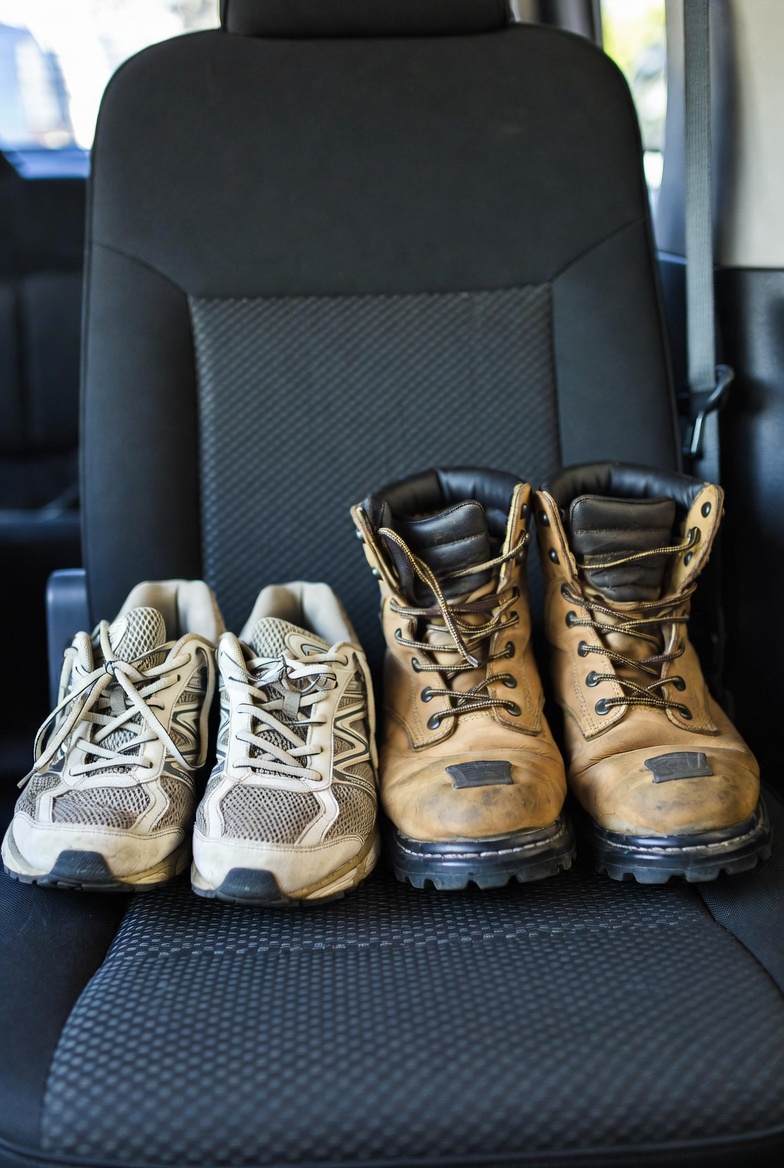
The most common approach among drivers who've been doing this a while is the two-shoe system: wear your safety boots in the depot for loading and unloading, then switch to runners once you're on the road. Keep the boots behind the seat for any pickup runs or depot returns later in the day.
If you go this route, invest in decent shoes. Cheap runners from Kmart will fall apart in three weeks of courier work. Look for trail runners with good grip, reasonable cushioning, and a solid sole. Brands like ASICS Gel-Venture, New Balance Fresh Foam, or Nike Pegasus Trail are popular choices among drivers. Expect to replace them every 3–4 months if you're full-time.
Another tip: get shoes that are easy to slip on and off. You'll be getting in and out of the van hundreds of times a day. Lace-up shoes that require retying are a time killer. Some drivers go for slip-on runners or use elastic laces to convert regular shoes into slip-ons.
Ultimately, it's a personal call. But if your company allows it and you're not handling heavy freight on the road, the switch to lighter footwear can make a noticeable difference to your comfort, speed, and long-term joint health. Just don't be the driver who loads in thongs — we've all seen that person, and it never ends well.