
You'll lift thousands of parcels this week. Most of them are light — under 5kg, no drama. But then there's the 32kg box of tiles with no handles, the awkward-shaped flat pack that won't stay balanced, or the pallet of water bottles that need to come off the truck one slab at a time. How you handle these moments determines whether you're still doing this job in five years or sitting in a physio's office wondering where it all went wrong.
The Basics That Most Drivers Skip
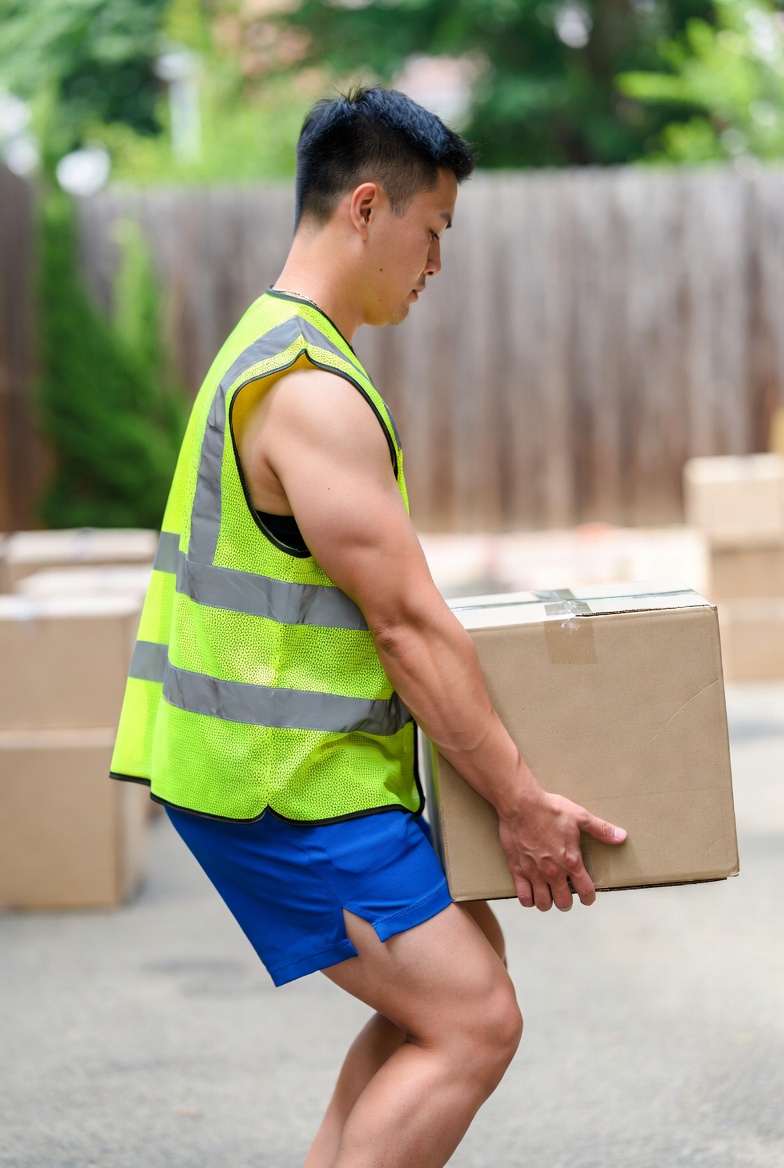
You've heard "lift with your legs" a thousand times. But here's what that actually means in practice: feet shoulder-width apart, get as close to the item as possible, bend your knees, keep your back straight, grip firmly, and drive up through your legs. Your legs are the strongest muscles in your body — your lower back is one of the weakest.
The biggest mistake drivers make isn't lifting heavy things — it's lifting light things badly, hundreds of times a day. That 3kg parcel you twist and grab one-handed out of the van 150 times? That repetitive twisting motion is what causes disc injuries over time. According to Safe Work Australia's manual handling guidelines, manual handling injuries are the most common workplace injury in Australia, accounting for over 30% of all workers' compensation claims.
Take the extra half second to face the item square on, use two hands, and don't twist at the waist while carrying. It feels slow at first, but it becomes automatic — and your back will still be working in ten years.
Weight Limits and Your Rights
Under Australian work health and safety laws, there's no single "maximum weight" a person can lift — it depends on the situation. However, most courier companies set their own limits. Common thresholds are 25kg for a single person and 30–35kg for team lifts. If a parcel exceeds these limits, you are within your rights to request assistance or equipment.
Know your limits. A 25kg box is manageable from waist height on a flat surface. That same 25kg box at ground level, at the back of a full van, reaching over other parcels? That's a completely different proposition and significantly higher injury risk.
Oversize items: Weight isn't the only factor. A 15kg item that's 2 metres long is harder to handle than a 25kg compact box because you can't get your centre of gravity close to it. For long, awkward items, use your van's cargo area as a slide rail — drag it to the edge, then lift from a close position.
Tools That Save Your Body
Hand trolley / sack truck: Every driver should have one. A basic folding hand trolley costs $50–$80 and saves your back hundreds of times a week. Use it for anything over 15kg or for multi-box deliveries. Strap the load so it doesn't shift.
Ramp or tail lift: If your van has a tail lift, use it — even for lighter items when you're fatigued. If you don't have one, a portable ramp for wheeling heavy items out is worth the investment. Jumping down from the cargo area with a heavy parcel is a knee and ankle injury waiting to happen.
Lifting straps: For furniture and heavy appliances, lifting straps distribute weight through your shoulders and arms rather than your hands and lower back. They cost under $30 and make two-person lifts significantly safer.
Gloves: Good grip gloves prevent parcels slipping, which means you're not making sudden grabs that strain your back and shoulders. They also protect your hands from cuts on damaged packaging and strapping.