
Australia floods. A lot. Whether it's a summer storm that dumps 100mm in an hour, a river system that breaks its banks, or just a low-lying street that turns into a creek every time it rains — if you're a delivery driver, you will encounter flooded roads. The rule is simple and non-negotiable: if it's flooded, forget it. No delivery is worth your life, your van, or the lives of the rescue crews who'd have to come and get you.
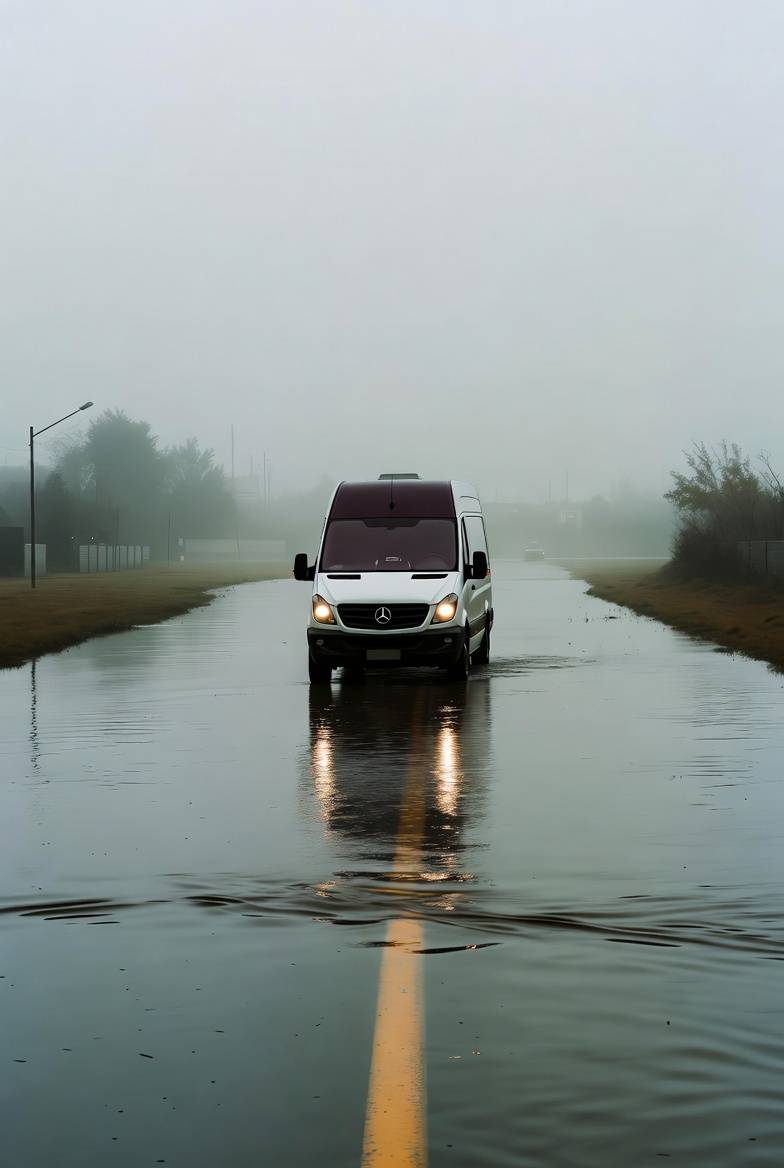
Never Drive Through Floodwater
This cannot be overstated. According to Queensland Government flood safety information, more deaths occur in floods than in any other natural disaster in Australia, and the majority involve people who drove into floodwater. It takes just 15 centimetres of moving water to knock an adult off their feet. It takes 60 centimetres to float a vehicle. Your delivery van, loaded with parcels, is not immune to this.
You can't see what's under floodwater. The road surface may be washed away. There may be debris, downed power lines, or open drains. What looks like a puddle across the road could be a metre deep where the road has collapsed. Drivers who've been caught out will tell you it happened in seconds — the water was barely over the tyres, then suddenly the van was floating.
If your van's engine ingests water, it's catastrophic. Hydrolocking destroys the engine instantly and the repair bill can write off the vehicle. If you're an owner-driver, your insurance may not cover flood damage if you drove into water voluntarily.
What to Do Instead
Turn around. Find an alternative route. Yes, it might add 15 minutes to your run. That's a lot better than adding a tow truck, an engine rebuild, and a near-death experience.
Contact your supervisor. Report the flooded area immediately. They can reroute other drivers and notify dispatch. If an entire suburb is flood-affected, your supervisor may pull those deliveries from today's manifest entirely.
Scan appropriately. Use the correct failure code — weather/flood/road closed. This protects you from failed delivery metrics and creates a record of the conditions.
Check the BOM. Before you start your run on a rainy day, check the Bureau of Meteorology warnings for your area. If there are flood warnings active, plan your route to avoid known low-lying areas.
Know your area. After a few wet seasons on the same run, you'll learn which streets flood first. That dip in the road that's fine on a dry day? It'll be underwater after 30mm of rain. Build this local knowledge and route around problem spots proactively.